Float Valves
Automatic tank level control with no power and no electrics. The float opens the valve as the level drops and shuts it before the tank overflows.
About Float Valves
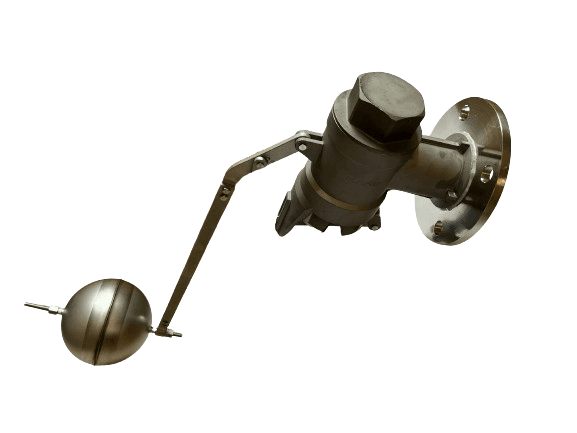
A float valve keeps a tank topped up without a controller, a level sensor, a power supply or anything to fail electrically. A float rides on the water surface and acts directly on a valve: as the level drops the valve opens and refills, and as the level rises the float shuts it again. For remote tanks, livestock troughs, fire water storage and anywhere running power would cost more than the tank, it remains the simplest reliable answer there is.
Key Features
- ✓Automatic level control with no power or electrics
- ✓Direct-acting and hydraulically lever-operated designs
- ✓CF8M 316 stainless steel body
- ✓Hydraulic operation for large bore and high inlet pressure
- ✓EPDM and NBR seat materials
- ✓Flanged connections
- ✓Cannot be held on by a failed relay or controller
Direct-acting or hydraulically lever-operated
A direct-acting float valve uses the buoyancy of the float itself to push the seat shut. It's simple and completely self-contained, and it works well while the valve is small and the pressure is moderate. The limitation is physics: the force available is only the float's buoyancy on a lever arm, and as bore and line pressure rise, that force stops being enough to close against the line.
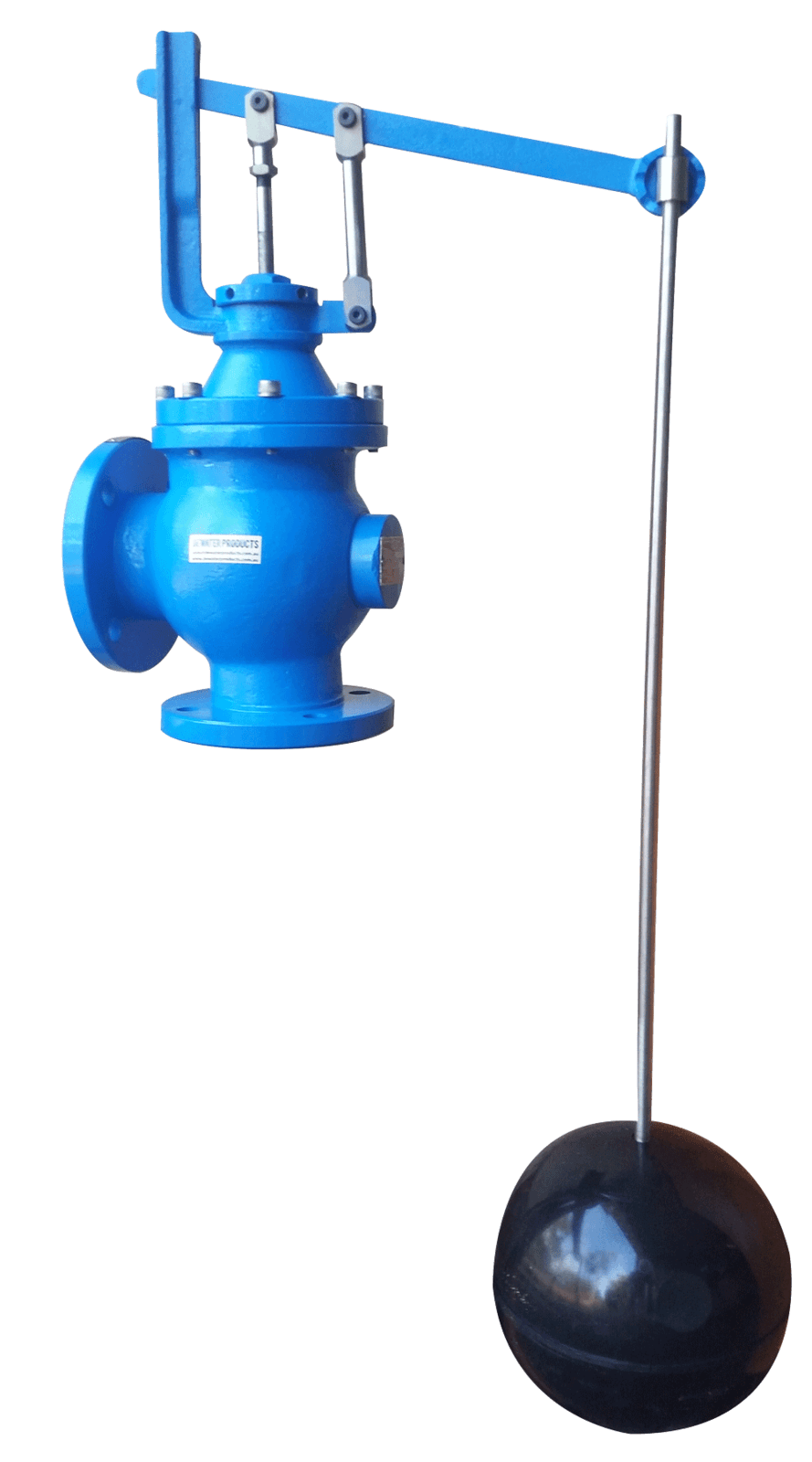
A hydraulically lever-operated float valve gets around this by letting the float operate a small pilot, and the line pressure itself then does the work of closing the main valve. The float only has to move the pilot. That's what lets one valve handle a large bore and high inlet pressure, and it's why our hydraulically lever-operated flanged unit is the one specified on big reservoir and fire tank duties where a direct-acting valve would simply be held open by its own supply.
The practical rule: small tank, modest pressure, take direct-acting. Large bore or high inlet pressure, take hydraulically operated. If a direct-acting valve is already failing to shut on your installation, pressure is almost always why.
Why they still beat an electric level control
A float valve has no power supply, no solenoid, no float switch, no controller and no cable run. There is nothing in it to lose when the power goes out, which on a stock trough or a remote reservoir is the scenario that matters most. It also cannot be left on by a failed relay, because the thing that shuts the valve is the water level itself.
That doesn't make it maintenance-free. The float, the arm and the seat are all mechanical, and a trough valve full of grit or a float that has taken on water will stop working. But the failure is visible and local, and fixing it needs a spanner rather than an electrician.
Materials and installation
Our flanged float valve is a CF8M 316 stainless body, which handles treated water, bore water and the general run of tank and reservoir duty without corroding at the waterline, which is where a lesser material goes first. Seats are available in EPDM and NBR to match the water.
Two things decide whether the installation works. Give the float clear space to rise and fall: a float that fouls the tank wall, a ladder or an inlet pipe will jam part-open and overflow the tank. And set the level with the tank's actual drawdown in mind, because a valve set too close to full cycles constantly on every small draw, which wears the seat out quickly.
Float Valves Specifications
| Types | Direct-acting and hydraulically lever-operated |
|---|---|
| Body material | CF8M 316 stainless steel |
| Connection | Flanged |
| Seat materials | EPDM and NBR |
| Power required | None, the float acts on the valve directly |
| Large bore / high pressure | Hydraulically lever-operated |
| Control | Level set by float position |
Figures shown against a named product belong to that product. Tell us your line size, pressure and operating temperature and we will confirm what suits the duty.
Who selects these valves
Kris McKeown, Director, Dewater Products. Over 12 years as a Mechanical Engineering Technician and more than 17 years in industrial sales. Kris sources and specifies the valve range directly with the manufacturers.
Dewater Products has supplied industrial fluid piping products Australia-wide from Perth since 2015, sourcing from over 20 approved manufacturers across 5 countries. If you are not sure which valve suits your duty, call 1300 271 290 and talk it through before you order.
Float Valves FAQs
What's the difference between a direct-acting and a hydraulically operated float valve?
A direct-acting valve uses the float's own buoyancy to push the seat shut, which works while the bore and pressure are modest. A hydraulically lever-operated valve lets the float move a small pilot and the line pressure then closes the main valve, so one valve can handle a large bore and high inlet pressure. If a direct-acting valve won't shut on your installation, inlet pressure is almost always the reason.
Does a float valve need power?
No. There's no solenoid, float switch, controller or cable run, so there's nothing to lose in a power cut, which on a remote reservoir or a stock trough is the scenario that matters. It also can't be held open by a failed relay, because the water level itself is what shuts the valve.
Why is my float valve overflowing the tank?
Most often the float is fouling something. If the arm or float catches on the tank wall, a ladder or an inlet pipe it jams part-open and the tank keeps filling. The other common cause is inlet pressure higher than a direct-acting valve can close against, which calls for a hydraulically operated valve instead. Grit on the seat will also hold it off its seal.
What level should I set the valve to?
Allow for the tank's actual drawdown. A valve set too close to full will cycle on every small draw, and that constant opening and closing wears the seat out quickly. Set it so the tank draws down a sensible amount before the valve calls for water, and make sure the float has clear space to travel through that whole range.