Butterfly Valves
Quarter-turn valves with a rotating disc. The compact, lower-cost way to isolate or throttle a large-bore line, in CF8M stainless and PTFE lined cast iron.
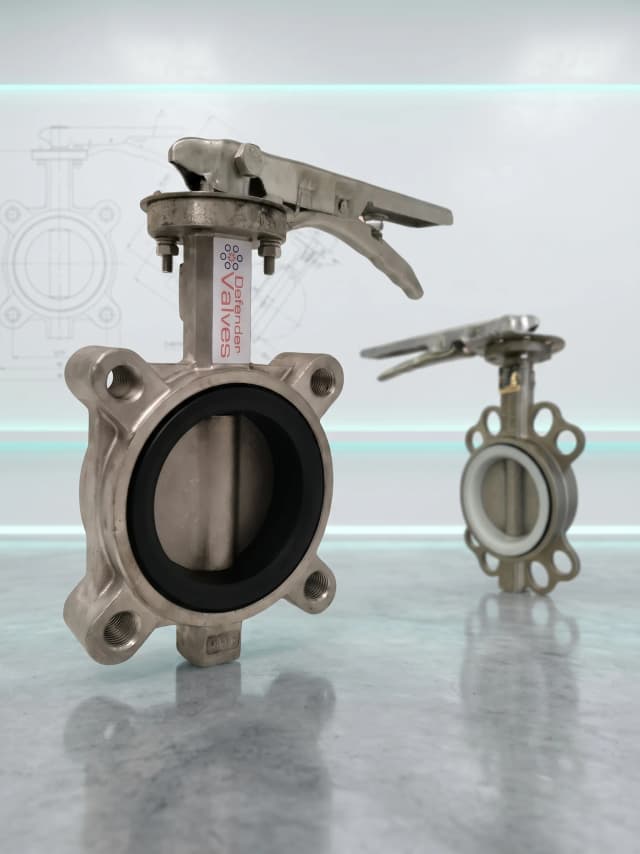
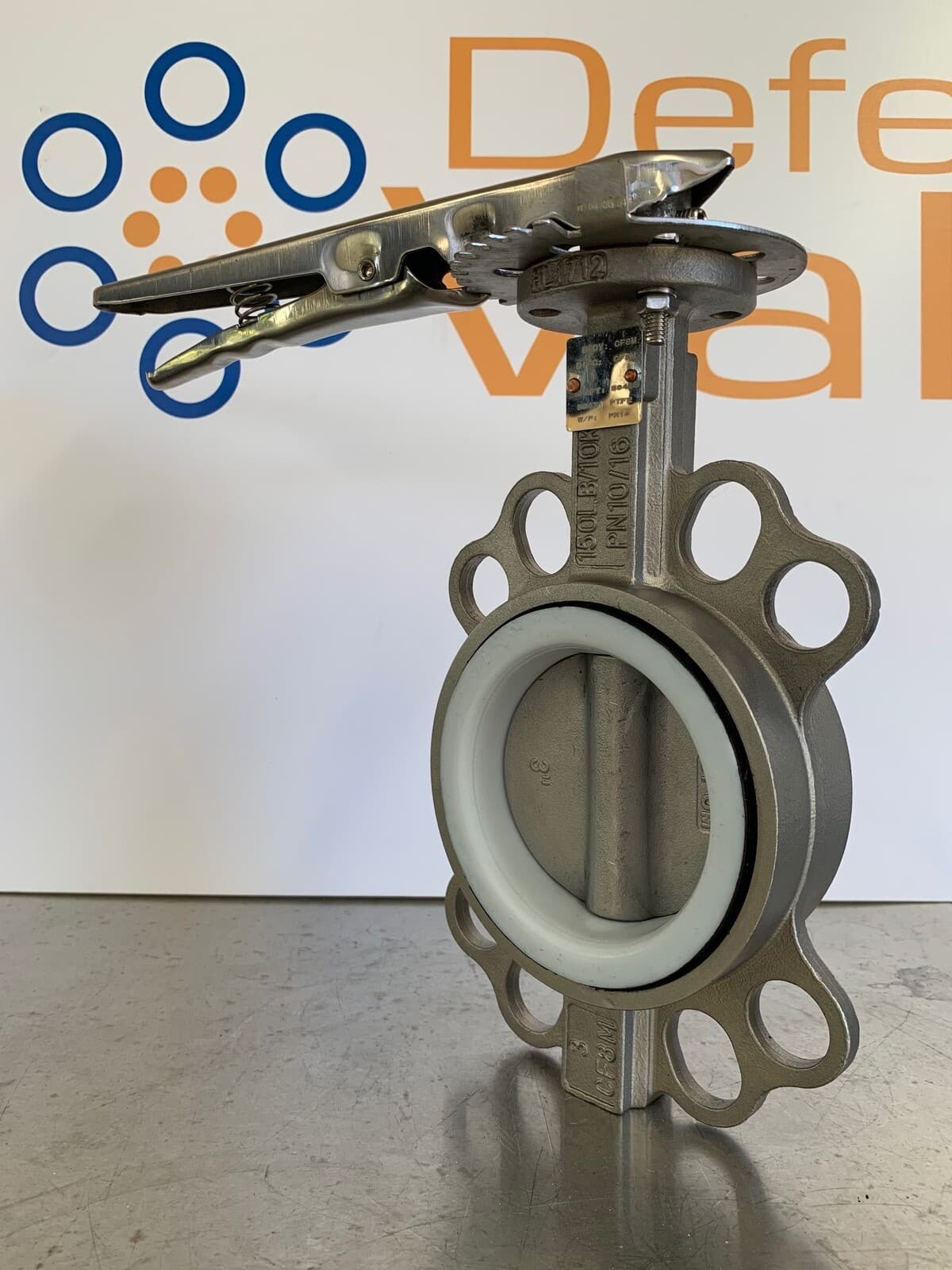
CF8M PTFE Butterfly Valve wafer
CF8M PTFE Butterfly Valve wafer
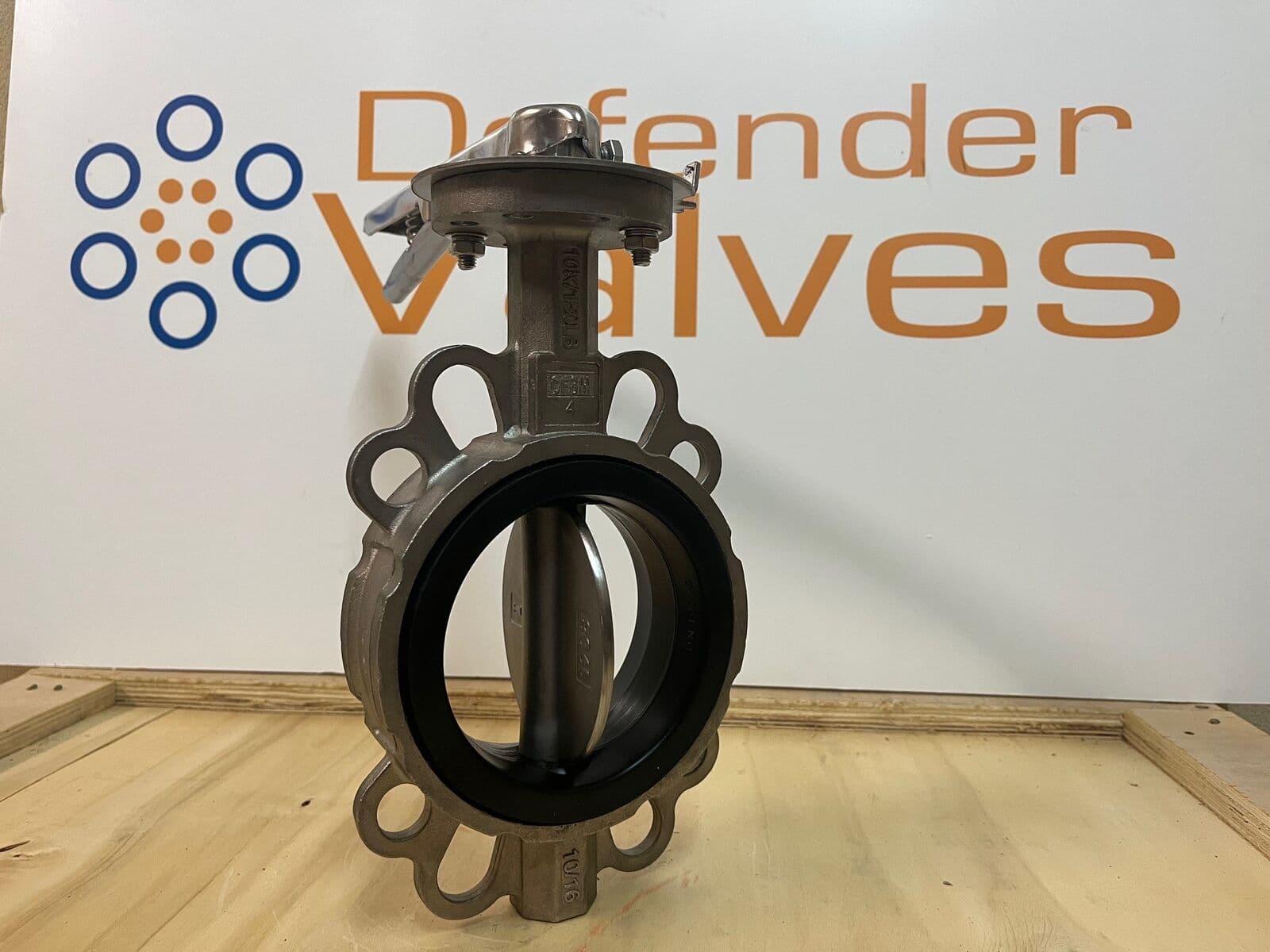
CF8M EPDM Butterfly Valve
CF8M EPDM Butterfly Valve
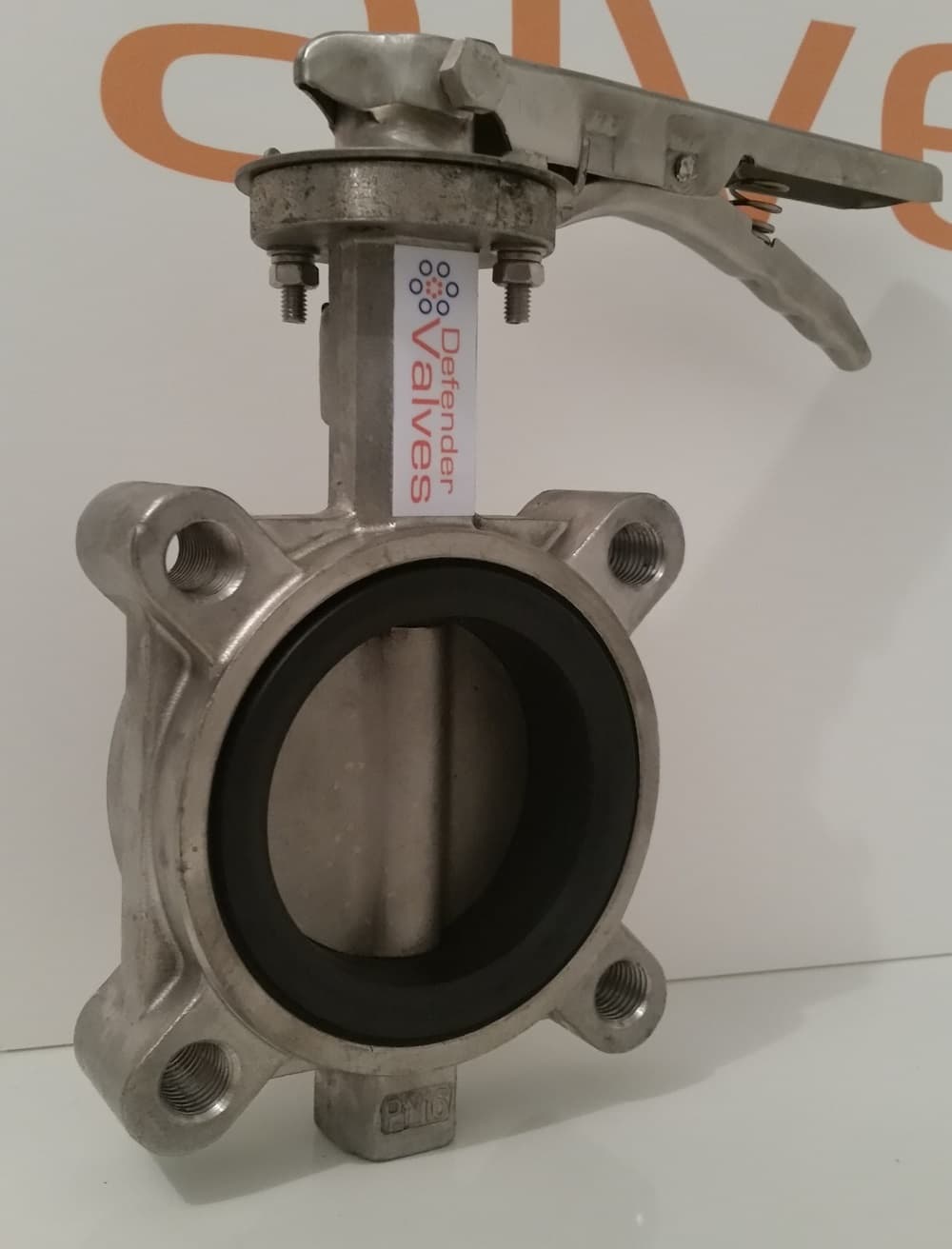
Lugged CF8M Butterfly Valve
Lugged CF8M Butterfly Valve
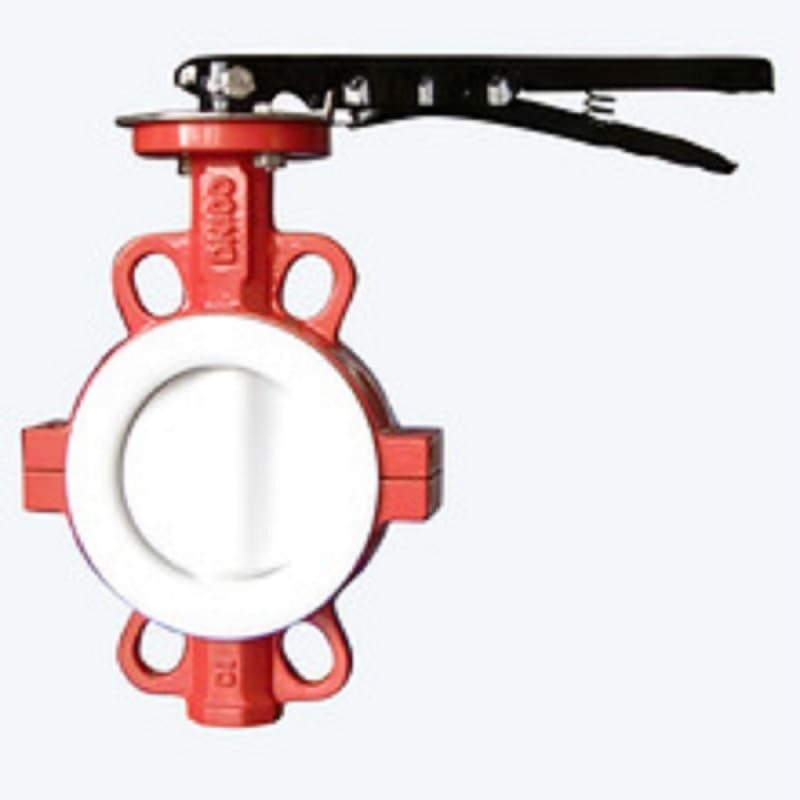
PTFE Lined Butterfly Valve
PTFE Lined Butterfly Valve
About Butterfly Valves
A butterfly valve is a disc on a shaft sitting in the middle of the flow. Turn it a quarter turn and the disc goes from face-on (closed) to edge-on (open). Because the whole valve is barely longer than the gasket it replaces, it costs and weighs a fraction of a gate valve in the same bore, which is why butterfly valves dominate large-diameter water, HVAC and process work. The trade-off is that the disc stays in the flow path when open, so it never gives you the completely clear bore a gate valve does.
Key Features
- ✓Quarter-turn operation, compact face-to-face
- ✓Wafer and lugged patterns
- ✓CF8M 316 stainless and PTFE lined cast iron bodies
- ✓EPDM seat for water and HVAC, PTFE for chemical duty
- ✓Disc and seat fully encapsulated on the PTFE lined valve
- ✓Universal drilling: ANSI 150lb, Table D and Table E
- ✓Lever or gear operated
Wafer or lugged: the difference that matters on site
A wafer valve is clamped between two flanges by bolts that run right through from one flange to the other. It's the cheaper and more common pattern, and it's correct wherever the valve sits mid-line with pipe on both sides.
A lugged valve has threaded lugs around the body, so each flange bolts to the valve independently. That lets you unbolt and remove the downstream pipework with the valve still holding pressure, which is what you want at the end of a line, at a pump or tank isolation point, or anywhere a section gets taken out for service. We supply both: a lugged CF8M body and wafer pattern bodies in CF8M with PTFE or EPDM seats.
If you'll ever need to break the line downstream without draining the system, specify lugged. Choosing wafer there means draining the line to do a job that should have taken an hour.
Seat material decides the duty
The body sets the pressure rating, but the seat decides what you can actually put through the valve. EPDM is the general-purpose water and HVAC seat: good on hot and cold water, poor on oils and hydrocarbons. PTFE is the chemical-resistance option and suits aggressive media that would attack an elastomer.
Our PTFE lined butterfly valve takes that further: it's a cast iron body where the disc and seat are fully encapsulated in PTFE, so nothing in the line touches the iron at all. It runs from -20°C to +120°C, is rated to PN10 working pressure up to DN200, and comes in a universal wafer pattern that drills to ANSI 150lb, Table D and Table E. That combination makes it the one to reach for on chemical dosing and aggressive process water where a stainless body alone wouldn't survive.
Throttling, and the mistake to avoid
Butterfly valves will throttle, which is one reason they get specified over gate valves, but the useful control range sits roughly between 20 and 70 degrees open. Below that the disc sits almost closed in a high-velocity stream and the seat erodes; above it you're barely changing the flow at all. Running a butterfly valve cracked slightly open as a permanent flow restriction is the most common way they get destroyed.
For on/off duty, lever operation is fine up to moderate sizes. As the bore and pressure grow, the torque needed to turn the disc against the line rises quickly and a gear operator becomes the practical choice. Tell us the size, pressure and whether it's isolation or control duty and we'll specify the operator with it.
Butterfly Valves Specifications
| Patterns | Wafer and lugged |
|---|---|
| Body materials | CF8M 316 stainless, cast iron with full PTFE lining |
| Seat materials | EPDM and PTFE |
| PTFE lined valve, temperature | -20°C to +120°C |
| PTFE lined valve, pressure | PN10 working pressure up to DN200 |
| Flange standards | Universal wafer pattern, ANSI 150lb, Table D and Table E |
| Operation | Lever, or gear operator on larger sizes |
Figures shown against a named product belong to that product. Tell us your line size, pressure and operating temperature and we will confirm what suits the duty.
Who selects these valves
Kris McKeown, Director, Dewater Products. Over 12 years as a Mechanical Engineering Technician and more than 17 years in industrial sales. Kris sources and specifies the valve range directly with the manufacturers.
Dewater Products has supplied industrial fluid piping products Australia-wide from Perth since 2015, sourcing from over 20 approved manufacturers across 5 countries. If you are not sure which valve suits your duty, call 1300 271 290 and talk it through before you order.
Butterfly Valves FAQs
Should I use a wafer or a lugged butterfly valve?
Use wafer where the valve sits mid-line with pipe on both sides, since the bolts run straight through from flange to flange and it costs less. Use lugged at the end of a line, or at a pump or tank isolation point, because each flange bolts to the valve independently and you can remove the downstream pipework with the valve still holding pressure.
EPDM or PTFE seat?
EPDM is the general-purpose seat for hot and cold water and HVAC, but it isn't suitable for oils or hydrocarbons. PTFE is the chemical-resistance option for aggressive media. For the most demanding chemical duty we supply a PTFE lined valve where the disc and seat are fully encapsulated, so nothing in the line contacts the body.
Can a butterfly valve be used to throttle flow?
Yes, but the useful control range is roughly 20 to 70 degrees open. Below that the disc sits in a high-velocity stream and the seat erodes; above it you're barely changing the flow. Leaving a butterfly valve cracked slightly open as a permanent restriction is the most common way they get destroyed.
What temperature and pressure will the PTFE lined valve take?
It runs from -20°C to +120°C and is rated to PN10 working pressure up to DN200. It uses a universal wafer pattern that drills to ANSI 150lb, Table D and Table E, so it fits the common Australian flange standards without a special order.