Tee Strainers
T-type tee strainers for large-diameter pipelines: high flow, low pressure drop, and generous debris capacity in 316 stainless steel.
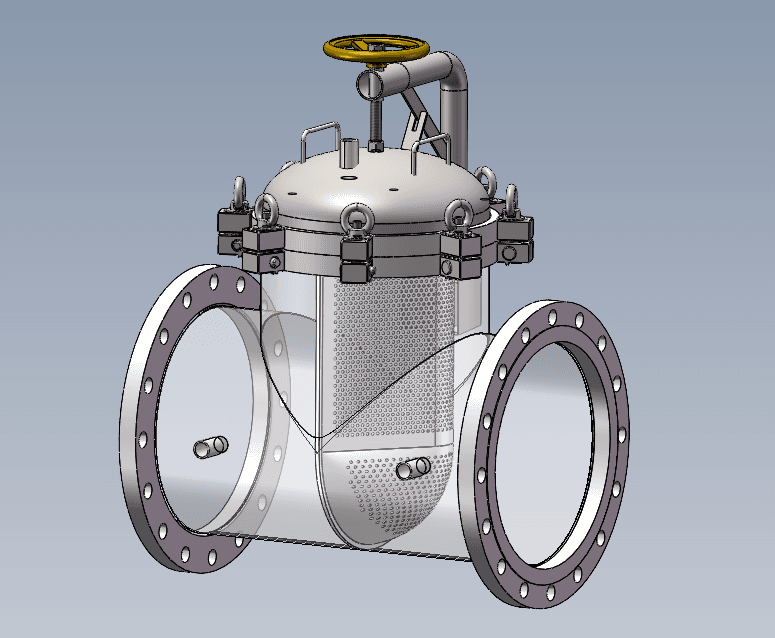
About Tee Strainers
A tee strainer, also called a T-type or T-pattern strainer, uses a straight-through T-shaped body that holds a large cylindrical screen in line with the flow. Because the flow does not have to turn, pressure drop stays low even at high flow rates, which is what makes this type the practical choice on large-diameter water and wastewater mains where a Y strainer or a basket strainer would be undersized.
Where a tee strainer beats the alternatives
On large-diameter pipelines the limiting factor is usually pressure drop rather than debris capacity. A Y strainer forces the flow through an angled screen and a basket strainer turns it through the body, and both cost you head. The straight-through tee body avoids most of that, so on a DN300 or DN600 main it is often the only type that fits the hydraulic budget.
The screen is large, which means long intervals between clean-outs, and it withdraws through the branch for maintenance without cutting into the line.
Start-up and permanent duty
Tee strainers are commonly specified as temporary start-up strainers, catching the weld slag, grinding debris and construction rubbish that comes out of a new pipeline in its first weeks of operation, and then left in place or removed once the line is clean. They are equally used as permanent protection on pump stations and treatment plant inlets.
If you are commissioning a new main, it is worth deciding up front whether the strainer stays. A unit specified for permanent service is built and screened differently to one intended to be pulled out after commissioning.
Materials and standards
We build tee strainers in 316 stainless steel, flanged to AS4087 PN16 for Australian waterworks, in sizes from DN50 to DN600. Passivation and internal coatings such as PTFE are available where the water is aggressive or where you want maximum service life, and material certificates can be supplied with the unit.
Applications
Key Features
- ✓Straight-through T-pattern body for low pressure drop
- ✓316 stainless steel construction
- ✓AS4087 PN16 flanged connections
- ✓Sizes DN50 to DN600
- ✓Large screen area, long intervals between clean-outs
- ✓Screen withdraws through the branch for cleaning
- ✓Suits start-up and permanent duty
Tee Strainers Specifications
| Body material | 316 stainless steel |
|---|---|
| Size range | DN50 to DN600 |
| Pressure rating | AS4087 PN16 |
| Flange standard | AS4087, other standards to order |
| Screen element | Large stainless steel mesh or perforated screen |
| Surface treatment options | Passivation, PTFE and other internal coatings |
| Documentation | Material certificates available on request |
Maximum allowable working pressure reduces as fluid temperature rises. Give us your operating temperature along with your pressure and we will confirm the correct rating and seal material for the duty.
Who selects these strainers
Kris McKeown, Director, Dewater Products. Over 12 years as a Mechanical Engineering Technician and more than 17 years in industrial sales. Kris selects and specifies every strainer Dewater supplies.
Dewater Products has supplied industrial fluid piping products Australia-wide from Perth since 2015, sourcing from over 20 approved manufacturers across 5 countries. If you are not sure which strainer suits your duty, call 1300 271 290 and talk it through before you order.
Tee Strainers FAQs
What is the difference between a tee strainer and a basket strainer?
A tee strainer has a straight-through T-shaped body, so the flow does not have to turn and pressure drop stays low. A basket strainer turns the flow through the body, which costs more head but gives easier top-access cleaning. On large-diameter mains where pressure drop is the constraint, the tee strainer usually wins.
What size tee strainers do you supply?
DN50 to DN600 in 316 stainless steel with AS4087 PN16 flanging as standard. Larger and non-standard units can be fabricated to order.
Can a tee strainer be used as a temporary start-up strainer?
Yes, and it is one of the most common uses. A tee strainer catches the weld slag, grinding debris and construction rubbish that comes out of a new pipeline during commissioning. Tell us whether it is temporary or permanent at enquiry stage, because the two are built and screened differently.
How is the screen cleaned?
The screen withdraws through the branch of the tee, so you do not need to cut into the line or remove the body from the pipework. On large-diameter installations that is the difference between a routine maintenance task and a shutdown.