Basket Strainers
Simplex basket strainers in 316 stainless steel, built for water and wastewater duty. Top-access basket removal means cleaning without breaking pipework.
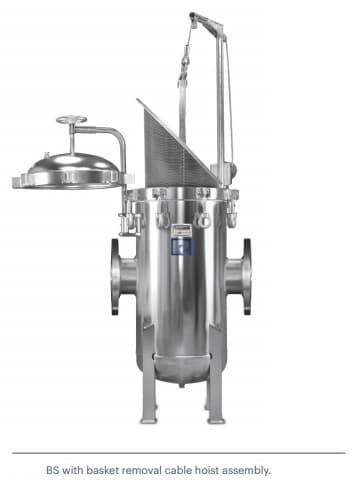
Fabricated Simplex Basket Strainer - Flanged ANSI
Fabricated Simplex Basket Strainer - Flanged ANSI
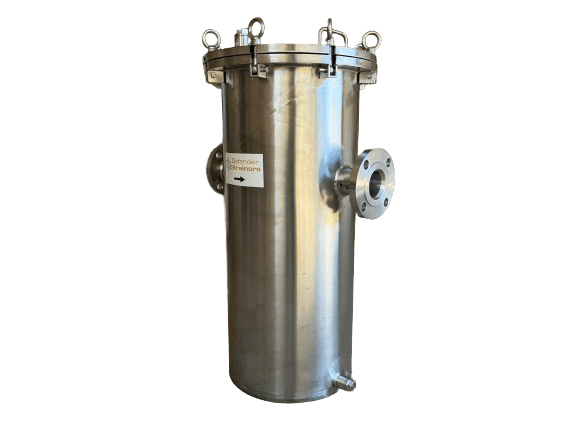
Oversized Simplex Basket Strainer
Oversized Simplex Basket Strainer
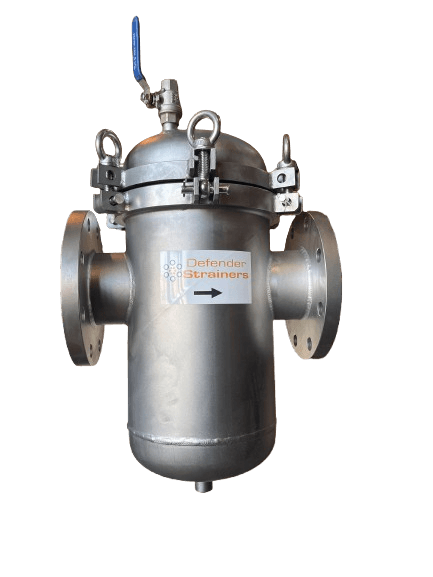
Simplex Basket Strainer 316 SS - Flanged AS4087 PN
Simplex Basket Strainer 316 SS - Flanged AS4087 PN
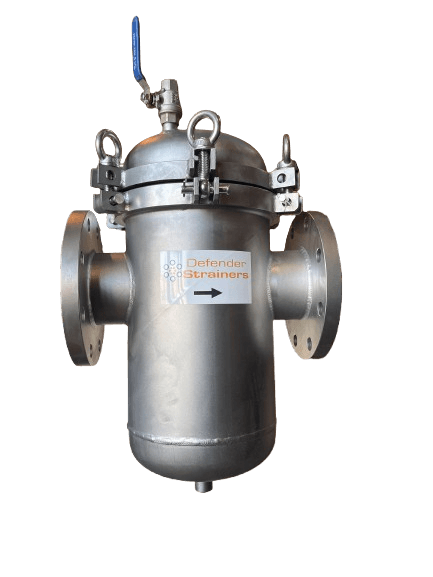
Simplex Basket Strainer 316 SS - Flanged Table D
Simplex Basket Strainer 316 SS - Flanged Table D
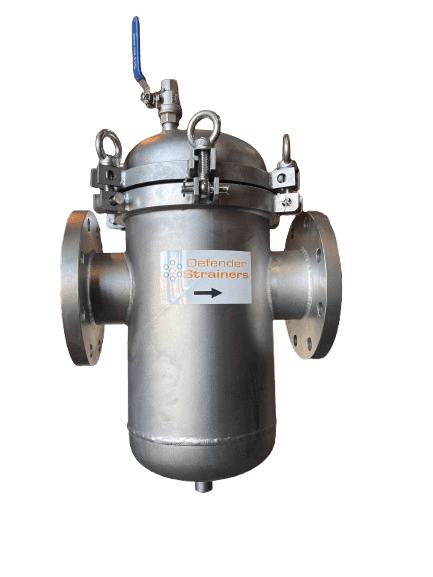
Simplex Basket Strainer 316 SS - Flanged Table E
Simplex Basket Strainer 316 SS - Flanged Table E
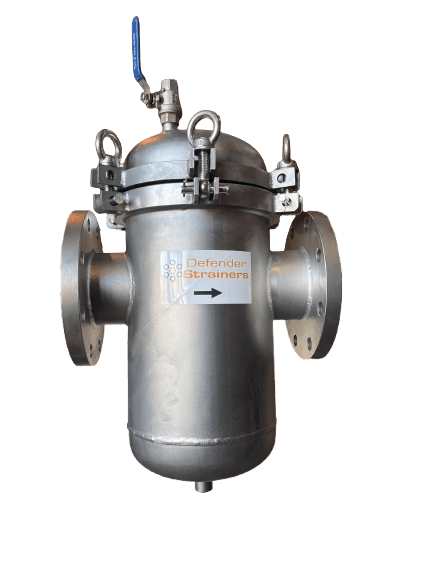
Simplex Basket Strainer 316 SS - Flanged ANSI 150L
Simplex Basket Strainer 316 SS - Flanged ANSI 150L
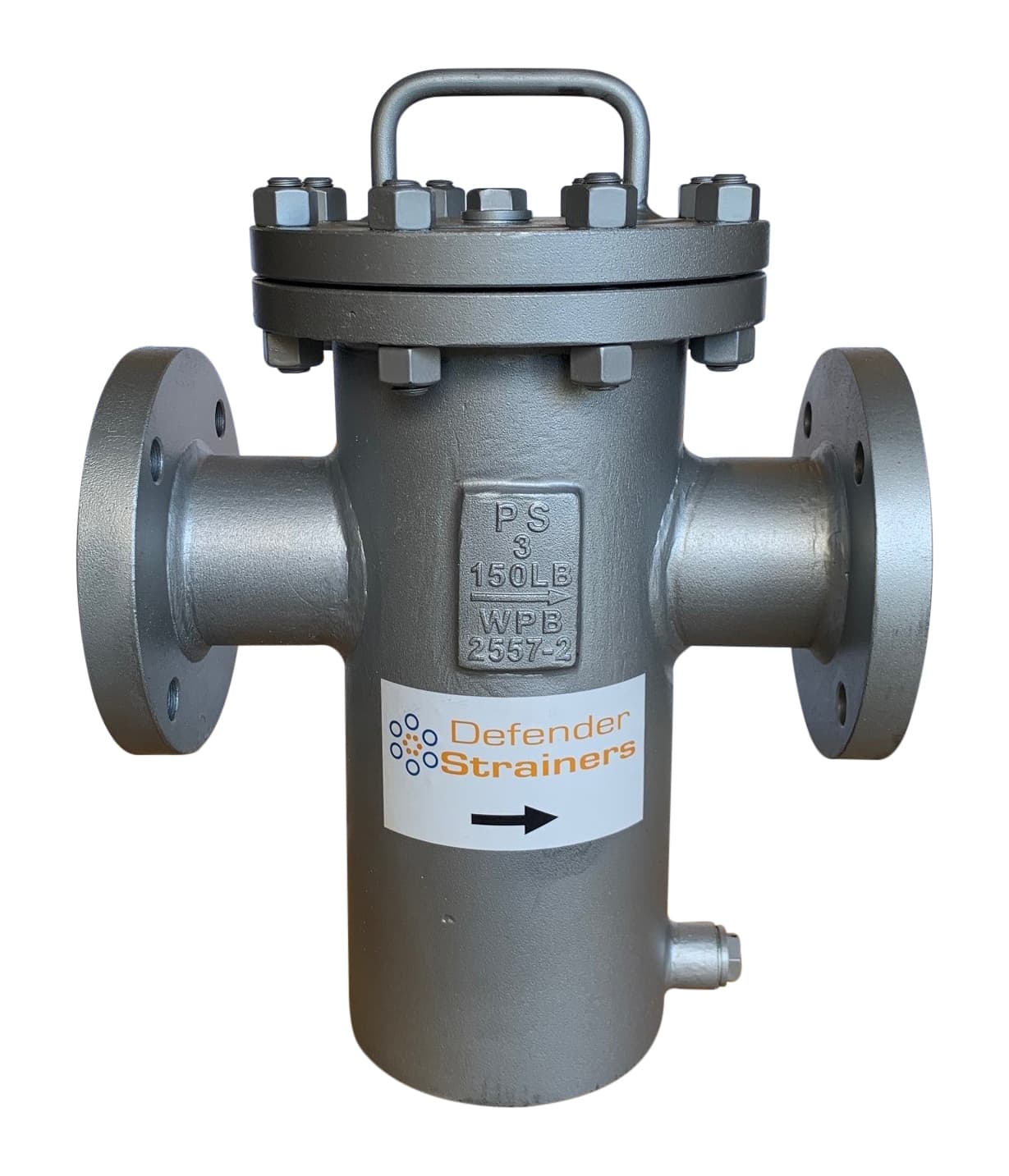
Simplex Basket Strainer Cast Steel - Flanged ANSI
Simplex Basket Strainer Cast Steel - Flanged ANSI
About Basket Strainers
A basket strainer holds a cylindrical screen inside a horizontal body, with the cover on top. That gives you far more open screen area than a Y strainer of the same line size, so you get lower pressure drop, longer intervals between clean-outs, and a basket you can lift straight out without disconnecting pipework. It is the strainer most commonly specified on water and wastewater lines where debris loading is real and maintenance has to be quick.
Built for the water industry
Dewater specialises in strainers for water and wastewater service rather than high-temperature process duty, and that focus shapes the range. The great majority of basket strainers we supply are 316 stainless steel, because it handles treated water, raw water, bore water and most wastewater without the corrosion problems you get from carbon steel or coated cast iron over a long service life.
That specialisation matters when you are selecting. A strainer chosen for a hot process line is a different animal to one chosen for a pump station or a treatment plant, and the compromises are not interchangeable. If your duty is water, you want the screen area, the corrosion resistance and the clean-out access optimised for water, which is what this range is built around.
Pressure, temperature and derating
The pressure ratings we supply are PN10, PN16 and PN20, the last of which is equivalent to ANSI Class 150. Those three cover effectively all municipal and industrial water work in Australia.
The point that catches people out is derating: the maximum allowable working pressure of a strainer falls as the temperature of the fluid rises. A unit rated PN16 at ambient is not rated PN16 at elevated temperature. The practical limit is usually set by the seal and gasket material rather than by the stainless body, since 316 stainless itself tolerates far more heat than any elastomer in the assembly. Tell us your operating temperature along with your pressure and we confirm the correct rating and seal material for the duty before you order.
Warm saline or chloride-bearing water is the other case worth raising early. Standard 316 stainless handles ambient and warm water well, but elevated temperature combined with high chloride content increases the risk of pitting corrosion, and a higher alloy may be the better answer. It is a short conversation at quote stage and an expensive one afterwards.
Making them last
The question customers ask most often is not about flow or pressure drop. It is how long the strainer will last. Our answer is surface treatment: passivation restores the passive chromium oxide layer on the stainless steel after fabrication and welding, which is where corrosion resistance is usually lost, and internal coatings such as PTFE add a further barrier for more aggressive service.
We can also supply a material certificate with the unit, so the alloy in your line is documented rather than assumed. For projects working to ASME B31.3, we can supply to that standard with the required design fundamentals and third-party inspection, which does add cost and lead time, so it is worth flagging at enquiry.
Applications
Key Features
- ✓Larger open screen area than a Y strainer of the same size
- ✓Top-access basket removal, no pipework disconnection
- ✓316 stainless steel (CF8M) standard for water service
- ✓PN10, PN16 and PN20 (ANSI Class 150) pressure ratings
- ✓0.5mm to 3mm screen openings, custom mesh to order
- ✓Passivation and PTFE internal coating options
- ✓AS4087 Table D/E and ANSI 150lb flanging
Basket Strainers Specifications
| Body material | 316 stainless steel (CF8M), cast iron, ductile iron and cast steel |
|---|---|
| Pressure ratings supplied | PN10, PN16 and PN20 (ANSI Class 150) |
| Flange standards | AS4087 Table D and Table E, ANSI 150lb, PN16 |
| Screen element | Perforated plate or mesh, 0.5mm to 3mm standard openings |
| Surface treatment options | Passivation, PTFE and other internal coatings |
| Documentation | Material certificates available on request |
| Special specifications | ASME B31.3 design and third-party inspection to order |
Maximum allowable working pressure reduces as fluid temperature rises. Give us your operating temperature along with your pressure and we will confirm the correct rating and seal material for the duty.
Who selects these strainers
Kris McKeown, Director, Dewater Products. Over 12 years as a Mechanical Engineering Technician and more than 17 years in industrial sales. Kris selects and specifies every strainer Dewater supplies.
Dewater Products has supplied industrial fluid piping products Australia-wide from Perth since 2015, sourcing from over 20 approved manufacturers across 5 countries. If you are not sure which strainer suits your duty, call 1300 271 290 and talk it through before you order.
Basket Strainers FAQs
What material should I choose for a basket strainer on a water line?
316 stainless steel is what we supply most often and what we recommend for water and wastewater duty. It handles treated, raw and bore water without the long-term corrosion issues of carbon steel or coated cast iron. Cast iron, ductile iron and cast steel bodies are available where budget or an existing specification calls for them.
What pressure ratings are available?
We supply PN10, PN16 and PN20, which is equivalent to ANSI Class 150. These cover the overwhelming majority of Australian municipal and industrial water applications. Note that the maximum allowable working pressure reduces as fluid temperature rises, so give us your operating temperature with your pressure and we will confirm the rating.
How do I get more service life out of a stainless steel strainer?
Passivation is the single most effective step, because it restores the protective oxide layer on the stainless after fabrication and welding. Internal coatings such as PTFE give an additional barrier for more aggressive service. We offer both, and we can supply a material certificate so the alloy is documented.
Can you supply to ASME B31.3?
Yes. ASME B31.3 requires specific design fundamentals and third-party inspection, which increases both cost and lead time compared with a standard unit, so let us know at enquiry stage if your project specification calls for it.
What is the difference between a simplex and a duplex basket strainer?
A simplex basket strainer has one basket, so the line must be stopped to clean it. A duplex strainer has two chambers and a changeover valve, letting you clean one basket while the other keeps filtering, which suits lines that cannot be shut down.