Flanged Suction Strainers
Flanged suction strainers that stop large debris reaching the pump. 316 stainless steel construction with a large open area, so you protect the pump without starving it.
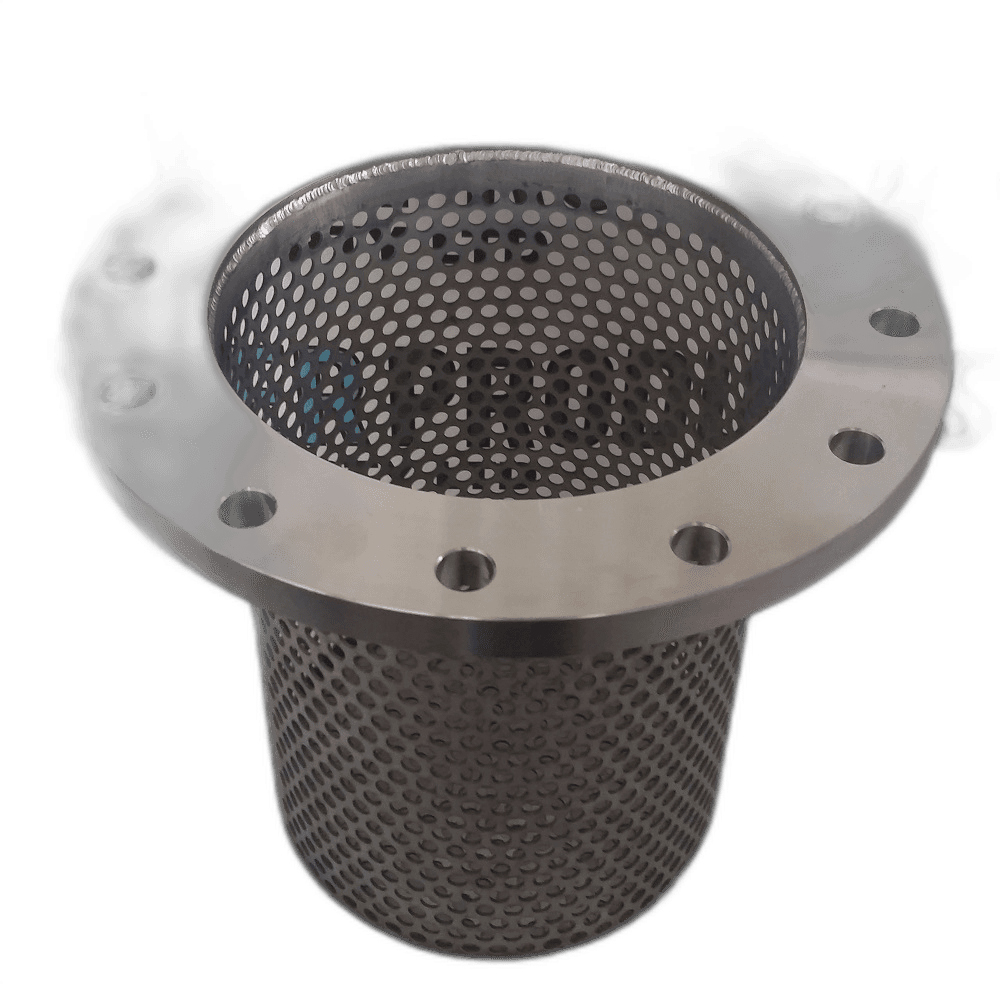
About Flanged Suction Strainers
A suction strainer bolts to the pump suction flange or sits in the suction line and catches the material that would wreck an impeller: rags, stones, weld slag, timber, plastic. It is a coarse screen by design, not a fine filter. The governing constraint is open area, because anything that restricts suction costs you net positive suction head, and a pump starved on the suction side cavitates and destroys itself faster than debris would.
Why open area is the number that matters
On a suction strainer the important specification is not the screen opening, it is the ratio of open screen area to pipe bore. Too little open area and the pressure loss across the strainer eats into available net positive suction head, which is the margin that keeps the pump from cavitating. That is why suction strainers are built physically much larger than the line they sit in, and why substituting an inline strainer for a proper suction strainer is a mistake that shows up as bearing and impeller damage months later.
Our suction strainers are built with a large open area for this reason, in sizes up to DN900, and can be made to your specification where a standard unit does not suit the pump.
316 stainless steel for water service
We build suction strainers in 316 stainless steel as standard. On a suction strainer that choice is not cosmetic. The strainer often sits submerged or in a wet well, it is awkward to inspect, and it is the component that gets forgotten until the pump fails. Stainless removes the failure mode where a corroded screen collapses and the debris it was holding goes straight into the pump.
For the same reason we offer passivation, which restores the protective oxide layer on the stainless after fabrication and welding, and internal coatings such as PTFE where the water is aggressive. Service life is the single most common question we get on strainers, and surface treatment is the most effective answer.
Flanging, sizes and specification
Flanging is to AS4087 Table D or Table E for Australian waterworks, or to ANSI 150lb, in pressure ratings of PN10, PN16 and PN20 (ANSI Class 150). Larger and non-standard units are fabricated to order, and material certificates are available so the alloy in your pump station is documented rather than assumed.
When you enquire, the useful information is the pump suction size and flange standard, the flow rate, the largest debris you need to stop, and whether the unit is submerged or inline. From that we can size the open area properly rather than just matching the pipe.
Applications
Key Features
- ✓Large open area to protect net positive suction head
- ✓316 stainless steel construction as standard
- ✓Sizes to DN900, larger units fabricated to order
- ✓AS4087 Table D/E and ANSI 150lb flanging
- ✓Removable screen for cleaning in place
- ✓Passivation and PTFE coating options
- ✓Made to your pump and pipework specification
Flanged Suction Strainers Specifications
| Body and screen material | 316 stainless steel standard |
|---|---|
| Size range | Up to DN900, larger fabricated to order |
| Pressure ratings supplied | PN10, PN16 and PN20 (ANSI Class 150) |
| Flange standards | AS4087 Table D and Table E, ANSI 150lb |
| Screen type | Perforated plate, coarse openings sized to the debris |
| Surface treatment options | Passivation, PTFE and other internal coatings |
| Documentation | Material certificates available on request |
Maximum allowable working pressure reduces as fluid temperature rises. Give us your operating temperature along with your pressure and we will confirm the correct rating and seal material for the duty.
Who selects these strainers
Kris McKeown, Director, Dewater Products. Over 12 years as a Mechanical Engineering Technician and more than 17 years in industrial sales. Kris selects and specifies every strainer Dewater supplies.
Dewater Products has supplied industrial fluid piping products Australia-wide from Perth since 2015, sourcing from over 20 approved manufacturers across 5 countries. If you are not sure which strainer suits your duty, call 1300 271 290 and talk it through before you order.
Flanged Suction Strainers FAQs
What size suction strainer do I need?
Size it on open area, not just on the pipe bore. A suction strainer needs enough open screen area that the pressure loss across it does not eat into your available net positive suction head, which is why these units are physically much larger than the line they serve. Send us the pump suction size, the flow rate and the largest debris you need to stop and we will size it properly.
Why stainless steel rather than a coated mild steel screen?
Because a suction strainer is often submerged, awkward to inspect, and easy to forget until something fails. A corroded screen can collapse and send everything it was holding straight into the pump. 316 stainless removes that failure mode, and passivation after fabrication restores the corrosion resistance lost during welding.
How fine should a suction strainer be?
Coarse. A suction strainer exists to stop the material that would damage an impeller, such as rags, stones, timber and weld slag. Making it fine restricts flow, risks cavitation, and blocks quickly. If you need fine filtration, put a basket strainer on the discharge side and keep the suction strainer coarse.
Can you supply oversized or non-standard units?
Yes. We supply to DN900 and fabricate larger and non-standard units to order, including custom flange standards and screen openings. Material certificates are available on request.